Peptide Library Synthesis Service
Custom peptide library synthesis for screening, epitope mapping, immune monitoring, drug discovery and proteomics. JPT supports libraries from micro-scale (nmol) synthesis to mg and g quantities, with library-specific purity and QC options, peptide modifications, and automated fill & finish services.
Library design support • High-throughput peptide synthesis • Automated fill & finish • Various formats
peptide expertise
peptides synthesized per year
Global customers
publications citing JPT's peptides
Explore Our Peptide Library Solutions
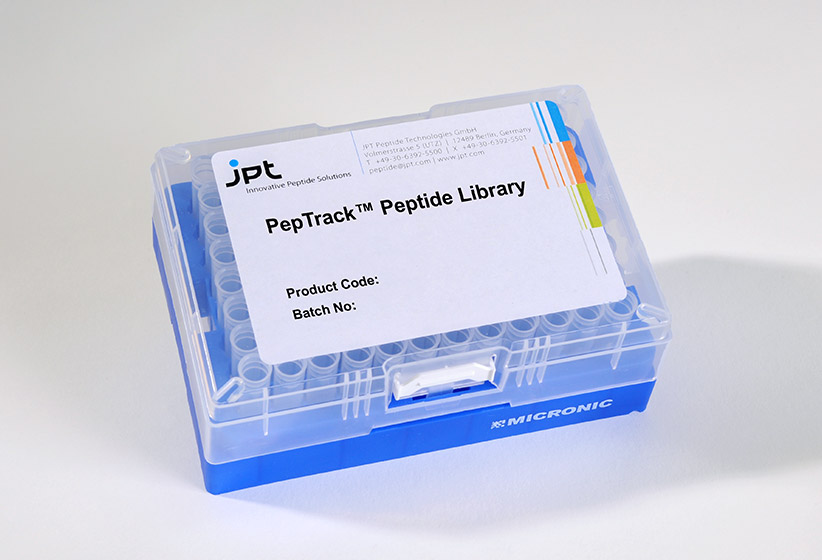
PepTrack™ Peptide Libraries
Our proprietary PepTrack™ Peptide Libraries are engineered specifically for cellular assays, such as T-cell assays. These peptide libraries are synthesized, purified, and analyzed to eliminate false-positive T-cell responses, prevent toxic inhibition, and extend peptide shelf life. With flexible specifications tailored to different applications, our customer support team is ready to help you choose the best peptide library specifications for your research.
Drug Discovery Peptide Libraries
Accelerate Small Molecule & Peptide Therapeutic ResearchProteomics Libraries & Kits
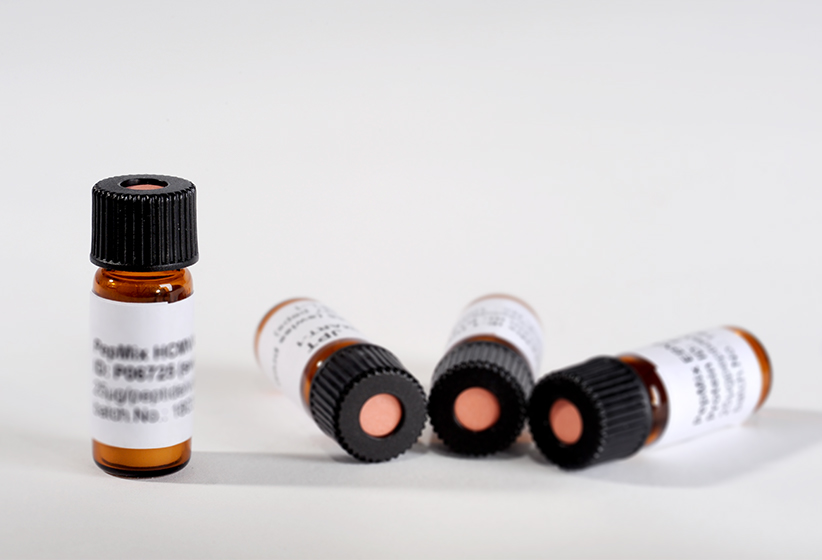
JPT offers the most extensive variety of proteomics reference peptides both customized and off-the shelf.
Our portfolio includes SIL peptides and absolute quantified peptides, peptide kits for control and standardization as well as a huge library of validated human reference peptides for mass-spectrometry-based proteomics.
BioTides Biotinylated Peptides
BioTides Biotinylated Peptides are designed for biomedical screening assays that require immobilization onto streptavidin coated beads, membranes, glass slides, or microtiter plates. They are synthesized in large numbers at unmatched pricing by high-throughput SPOT synthesis.
PRISMA
PRISMA (Protein Interaction Screen on Peptide Matrix) is a tool to systematically explore cell signal transmission. Peptides are immobilized on a membrane that is incubated with a biological sample. Interacting proteins are then identified and quantified by mass spectrometry.
ProteaseSpots
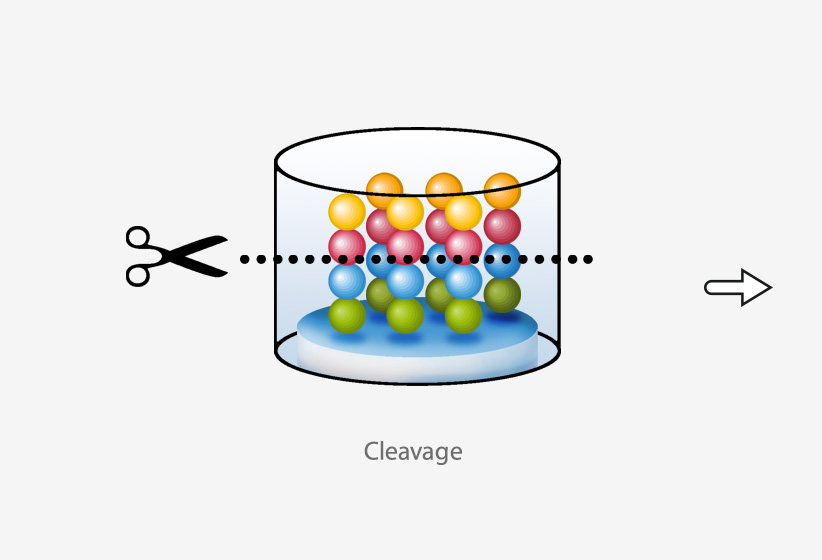
Protease Spots offer an efficient way to study protease activities and substrate specificities. Custom synthesized protease substrate peptides are immobilized on cellulose discs. The discs are delivered ready-to use in microtiter plates. During incubation with protease samples fluorescent detection can be performed at different time points.
Peptide Library Synthesis Capabilities
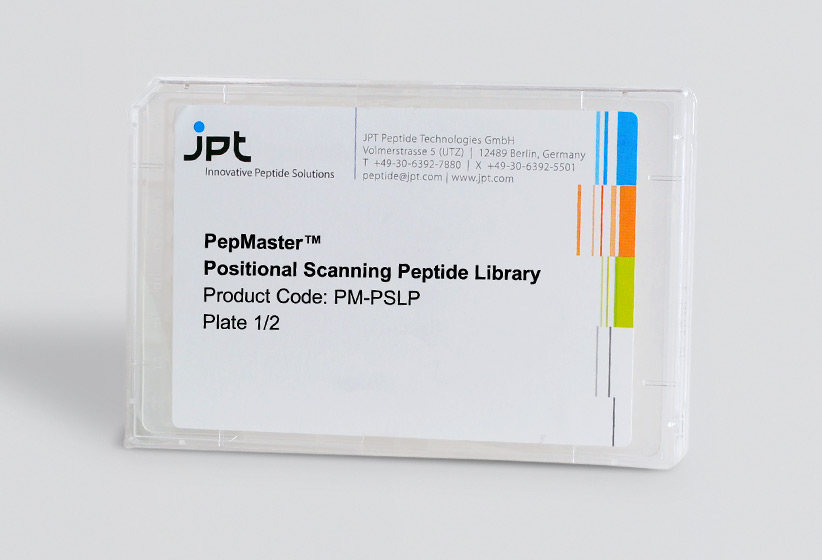
JPT's peptide-library specifications vary by library type and are flexible for each application. JPT's library formats include micro-scale and milligram-scale libraries, defined purity and QC options, customized modifications, individual tubes or plates, peptide pools, and automated compound-management services.
- Synthesis Scale: JPT offers peptide synthesis from micro-scale (nmol) through milligram and gram quantities across its peptide-library and custom-synthesis formats.
- Purity & QC: Purity and QC depend on your application. JPT offers options ranging from unpurified material to defined high-purity grades, with LC-MS, quantitation and other QC options.
- Peptide Modifications: JPT offers specialty libraries such as macrocyclic, biotinylated and stapled peptides as well as customized and post-translational modifications.
- Delivery Formats: JPT library formats include 96 MTP, tube racks or individual vials.
- Fill & Finish: JPT offers automated aliquoting into tubes and multiwell plates through its compound-management and fill & finish services, with samples as freeze-dried formats.
Which Peptide Library Format Fits Your Application?
Each peptide-library design addresses specific scientific questions, and JPT can recommend a suitable library or pool design for the intended application. The examples below summarize JPT library formats and uses.
| Research objective | Typical library approach | What it helps investigate |
|---|---|---|
| Linear epitope mapping | Overlapping peptide library | Sequence coverage, linear epitopes, T-cell epitopes, antibody epitopes and other binding regions |
| Key residue identification /SAR | Alanine scanning library | Key residues in epitopes, enzyme-binding parameters and protein-binding sites |
| lead optimization | Cyclic peptide library | Peptides with enhanced biostability, mimics of secondary structures, and optimized binding or protease stability |
| Peptide sequence optimization | Positional scanning library | Residues that increase activity or binding, including optimized antibody or T-cell epitopes |
| T-cell assays and immune monitoring | PepTrack™ peptide library | T-cell epitope discovery, immune monitoring and antigen-specific T-cell stimulation |
| Targeted proteomics | Proteomics libraries & kits | SIL reference peptides, absolute quantified peptides, control/standardization kits and mass-spectrometry workflows |
Why Researchers Choose JPT for Custom Peptide Libraries
- Library Design Expertise: JPT has designed and synthesized peptide libraries and pools for more than 20 years and provides recommendations on selecting a library or pool design for a specific application.
- Flexible Synthesis Platforms: JPT supports library synthesis from micro-scale (nmol) to mg and g quantities, with purity, QC and modification specifications that vary by library format.
- Automated Library Handling: JPT compound-management services provide automated high-throughput dispensing into tubes and multiwell plates.
- Quality & Supply Infrastructure: JPT describes LIMS-based quality management, batch reports and production-status tracking, together with AEO-certified procurement and in-house manufacturing of custom peptide building blocks.
Peptide Library Synthesis FAQ
What is a custom peptide library?
Which types of peptide libraries can JPT synthesize?
How do I choose the right peptide library design?
Can JPT help me design a peptide library?
Can peptide libraries include modifications?
Build the Right Peptide Library for Your Research
JPT combines peptide-library design support with high-throughput synthesis, library-specific purity and QC options, customized modifications, automated aliquoting and multiple delivery formats across its published library portfolio.